Ratio Before Recipe
Most people troubleshoot bad coffee by changing the wrong thing first. The grind gets finer. The water gets hotter. A different bean shows up on the counter. Meanwhile the actual culprit sits untouched: how much coffee went in relative to how much water.
Ratio is the number that decides whether a cup tastes thin or overwhelming before grind size or brew time ever get a vote. The Specialty Coffee Association's brewing control chart puts the target zone for most methods somewhere between 1:15 and 1:18, coffee to water by weight. Miss that window by a wide margin and no amount of dialing in grind will save the cup. You'll just get a more precisely wrong extraction.
A kitchen scale changes more than a scoop ever will. Scoops vary by bean density, by how hard you tap the scoop on the counter, by whether the beans are oily or dry. Fifteen grams of a dense Colombian and fifteen grams of a lighter, more porous natural can look identical in a scoop and behave completely differently in the cup. Weight doesn't care about any of that. Ten grams is ten grams.
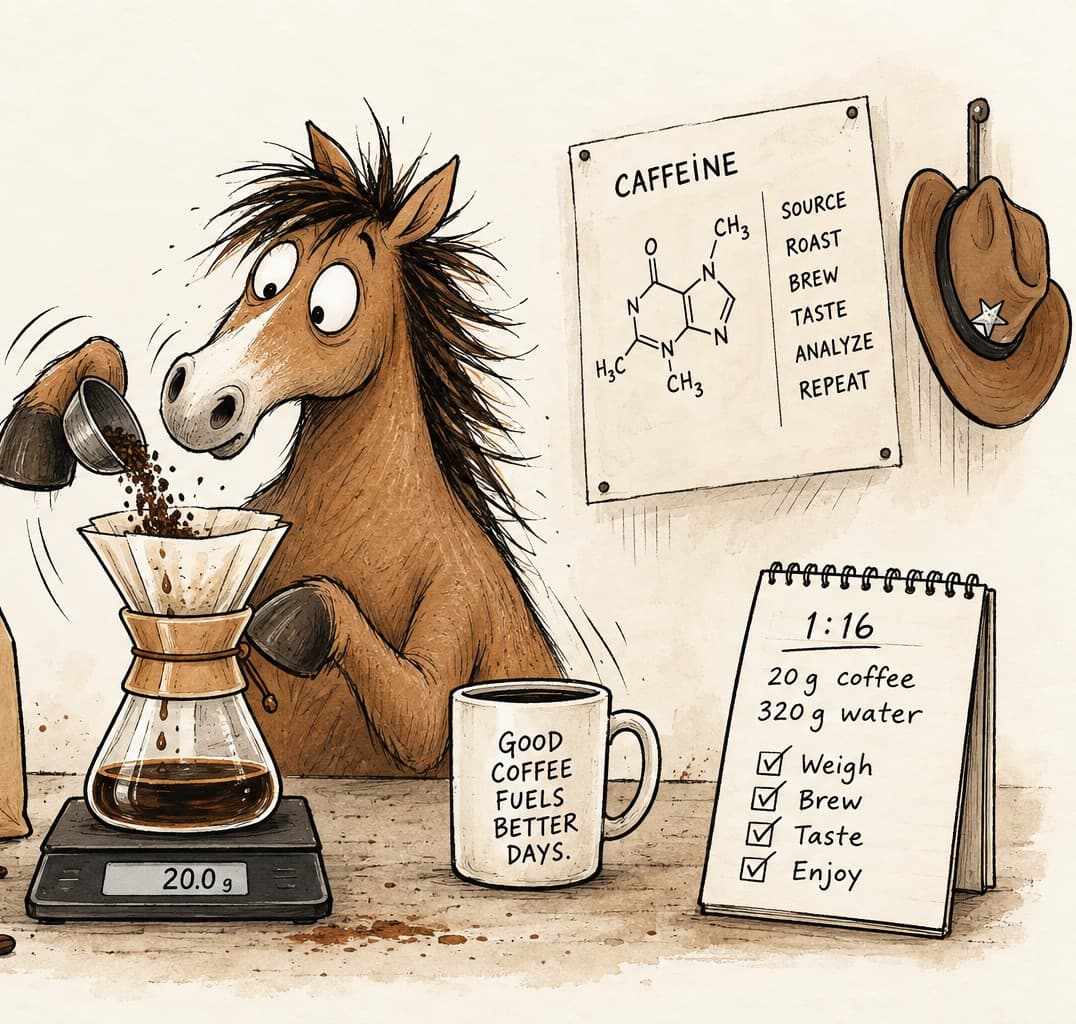
Start simple. For drip or pour-over, 1:16 is a workable default: roughly 20 grams of coffee to 320 grams of water for a standard mug and a half. For French press, most people land a little stronger, closer to 1:14 or 1:15, since there's no filter pulling fine particles out of the cup. Write the ratio down somewhere you'll actually see it. A sticky note on the canister works fine.
Once the ratio is locked, taste becomes a much easier problem to solve. Too sharp or sour, and the fix is usually a finer grind or a longer contact time, not more coffee. Too flat or muddy, and it's usually the opposite. But none of that troubleshooting means anything if the ratio itself is off, because you'd be adjusting the wrong variable to fix a problem the scale would have caught in ten seconds.
This matters more with lighter roasts, which is most of what we roast at Spur. Light roasts hold onto more of the bean's original density and moisture, so a scoop-based measurement swings further off target than it would with a darker, more uniformly roasted bean. If you've been guessing your way to inconsistent cups, a scale is the cheapest fix available. It costs less than a bag of good beans and it removes the guesswork from every single cup after.
None of this requires fancy equipment or a barista certification. It requires a scale that reads to at least a gram, and the discipline to use it instead of the scoop sitting in the bag. Once the ratio is right, you'll actually be able to taste what the roast is doing, rather than fighting a cup that was never going to work no matter how well it was brewed.
Grab a bag of whatever's fresh and put a scale under it this week. spur.coffee/shop