Why Coffee Blooms
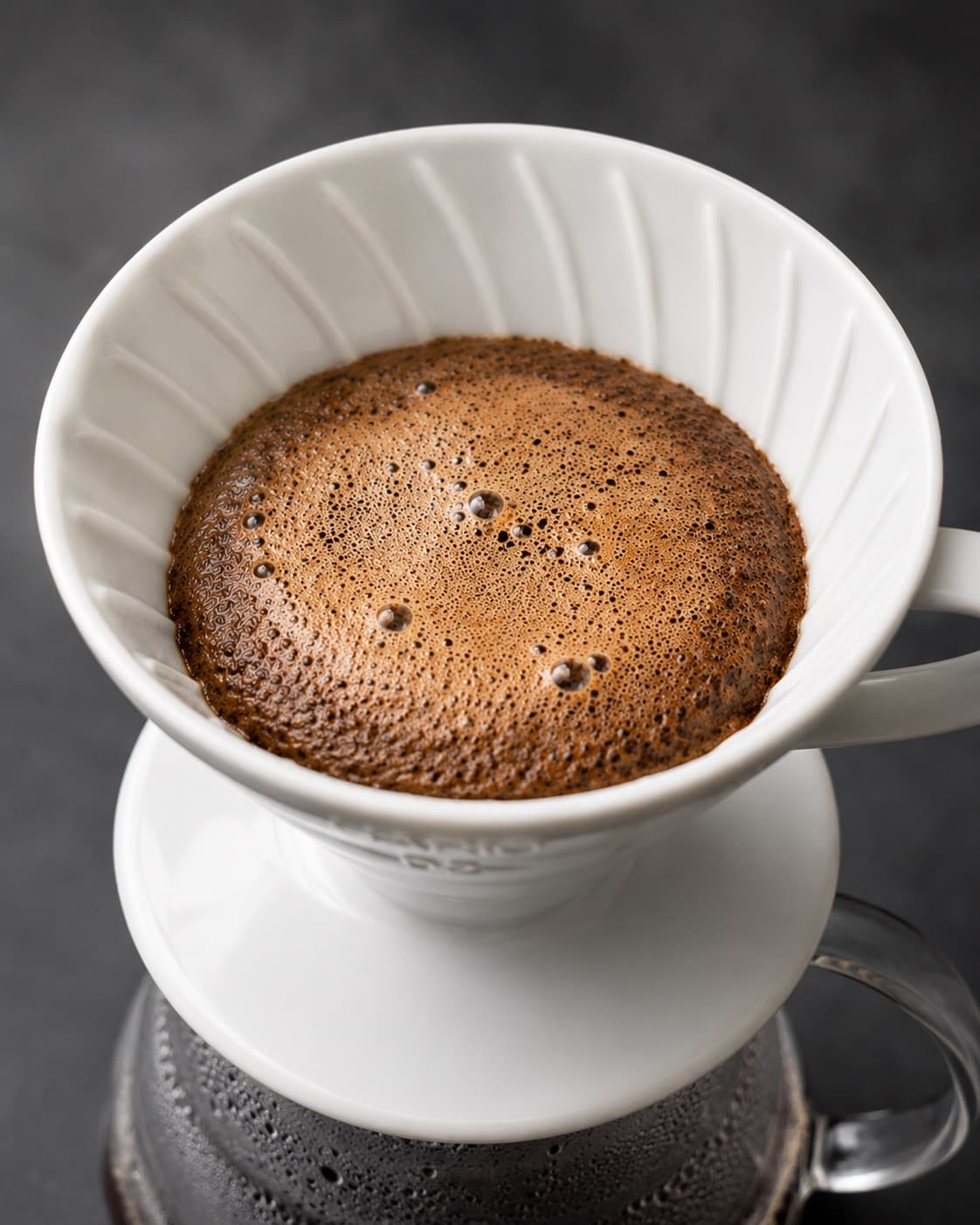
Fresh coffee has a tell.
Pour hot water over freshly ground coffee and the bed often swells, bubbles, and puffs up before settling back down. That little rise is called the bloom. It is easy to treat it like coffee theater, especially if you have watched someone make a careful pour-over, but the bloom is doing real work.
It starts in the roaster.
When green coffee is roasted, heat drives a long chain of chemical changes inside the bean. Those reactions create flavor, aroma, color, and a lot of carbon dioxide. Some of that gas leaves during roasting, but some stays trapped inside the porous structure of the roasted bean. After roasting, the coffee keeps releasing that gas over time. That slow release is called degassing.
This is one reason fresh coffee bags usually have a one-way valve. The valve lets carbon dioxide escape without letting oxygen rush in. Too much oxygen makes coffee go stale faster, but too much trapped gas can make a sealed bag puff up. Fresh coffee is still active after it leaves the roaster.
The bloom happens when hot water speeds that process up.
Once coffee is ground, there is much more surface area for gas to escape. When water hits the grounds, carbon dioxide pushes out quickly. That is the bubbling you see at the start of brewing. A lively bloom usually means the coffee is recently roasted and still holding gas. A very quiet bloom can mean the coffee is older, though roast level, grind size, storage, and brew method all matter too.
The practical point is not just freshness. It is extraction.
Coffee tastes good when water can move through the grounds evenly and pull out the right balance of sweetness, acidity, aroma, and body. If a lot of gas is pushing out at the same time water is trying to move in, the brew can become uneven. Some parts of the bed extract well. Other parts resist water and fall behind. The cup may taste sharp, thin, sour, or oddly muted even when the coffee itself is good.
A bloom gives the coffee a short chance to breathe before the main brew begins.
For pour-over, a simple rule works: use about twice as much water as coffee for the first pour, then wait 30 to 45 seconds. If you are brewing 25 grams of coffee, start with about 50 grams of water. Wet all the grounds, let the bubbling slow down, then continue the brew. You do not need to obsess over it. You just need to give the coffee bed a clean start.
For drip machines, you may not control the bloom directly, but the lesson still helps. Fresh coffee often brews better after a little rest from roast day, especially if it is light-to-medium and dense. Same-day roast can smell amazing but still taste tight in the cup because gas is interfering with extraction.
The bloom is a small reminder that coffee is not inert. It is changing from roast to brew to cup.
Freshness matters, but freshness also needs a little patience.
Our favorite starting point
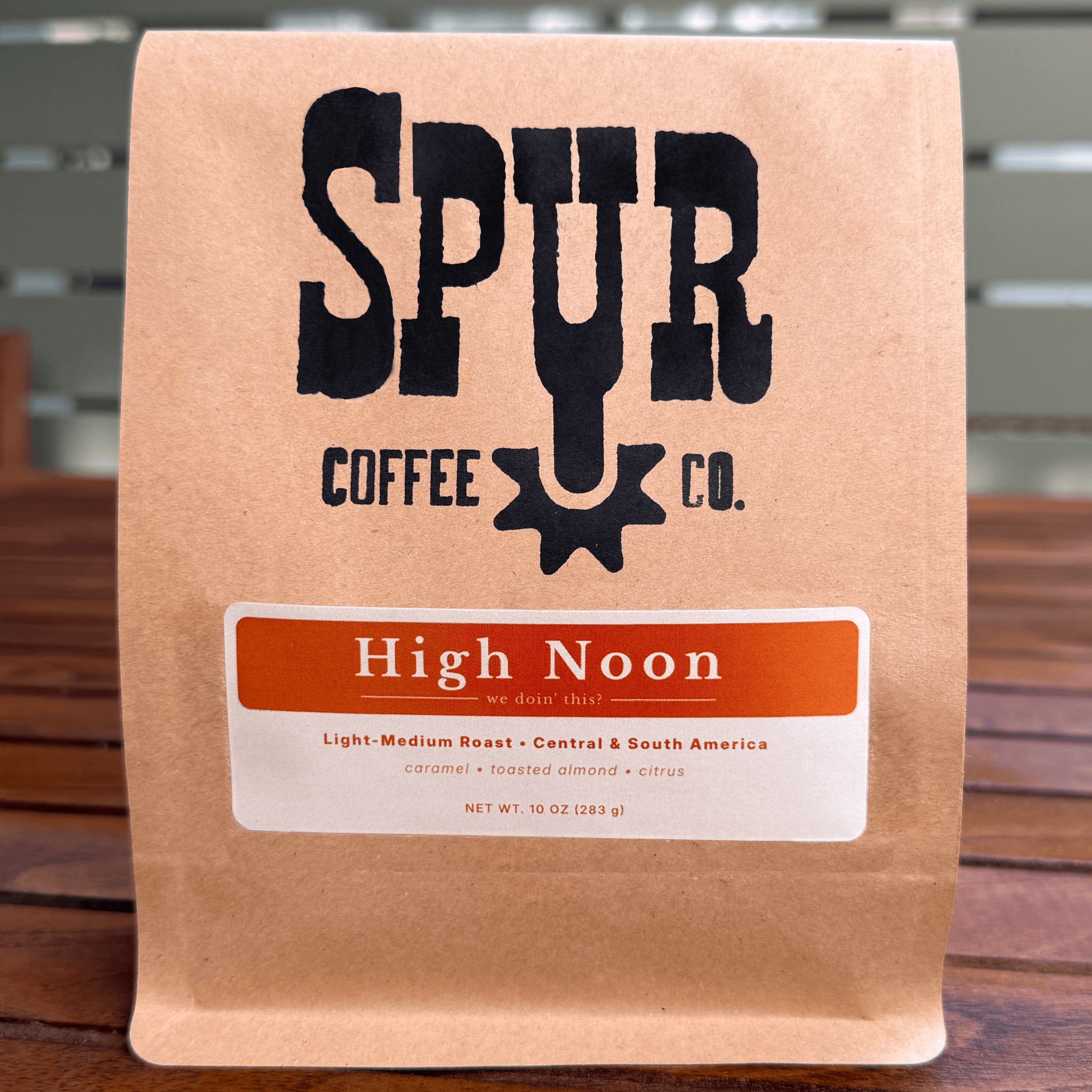
High Noon
A smooth, balanced daily drinker. Colombia + Guatemala, dialed in for clean extraction with enough body to hold up in milk.
Shop High Noon →