Stir Less, Taste More

Coffee brewing looks calm from the outside.
Water goes in. Coffee comes out. Maybe there is a pour-over cone, a French press, a drip machine, or an AeroPress sitting on the counter. It feels simple enough until the same beans taste clean one morning and rough the next.
One quiet variable is how much you move the coffee around.
That movement is called agitation. Stirring, swirling, pulsing water hard into the bed, pressing too aggressively, shaking the brewer, all of it changes how water meets the grounds. Sometimes that helps. Sometimes it makes a good coffee taste muddy, bitter, or strangely hollow.
Brewing is extraction. Water dissolves flavor from the ground coffee, and it does not pull every flavor at the same time. Acids and aromatics show up early. Sweetness and body need enough contact. Push too far and harsher bitter compounds start taking over. The Specialty Coffee Association's brewing work has long looked at this relationship through strength and extraction, and newer coffee science keeps showing that the cup is more complex than one perfect number.
Agitation matters because it speeds things up.
If water only slips through easy paths in the coffee bed, some grounds over-extract while others barely participate. A little movement can help wet everything evenly and keep the brew from channeling. That is why a gentle swirl after the bloom can be useful in a pour-over. It settles the bed and gives the coffee a fair shot.
But more movement is not always better.
Stir hard enough and you can knock fine particles loose, clog the filter, slow the drawdown, and pull more bitterness into the cup. In a French press, aggressive stirring can suspend more sludge and make the cup feel heavy. In a drip brewer, a tall, uneven bed can get churned in some places while other spots stay dry. The result is not strength in a good sense. It is confusion in the cup.
The practical fix is restraint.
For pour-over, bloom the coffee with enough water to wet the grounds, then give the brewer one gentle swirl or a light stir if dry pockets remain. After that, pour steadily and let the bed do its work. Do not dig at it like you are mixing pancake batter.
For French press, stir just enough to wet the grounds at the start. Let time handle the extraction. When the brew is ready, press slowly. If you slam the plunger down, fines push through and the last half of the cup can taste gritty and dry.
For drip coffee, your best move is usually before brewing: level the bed in the basket and use the right grind. If the machine has a showerhead that wets evenly, leave it alone. If it dumps water in one hard stream, a slight basket shake before brewing can help create a flatter starting bed.
Coffee does not need rough handling. Fresh, light-to-medium roasted beans already have plenty to say. The goal is to help water hear the whole story without forcing every last bit out of the grounds.
So tomorrow morning, change one thing: stir less. Swirl gently. Pour with a steady hand.
If the cup gets cleaner, sweeter, or less bitter, the coffee was not asking for more effort. It was asking for better touch.
Our favorite starting point
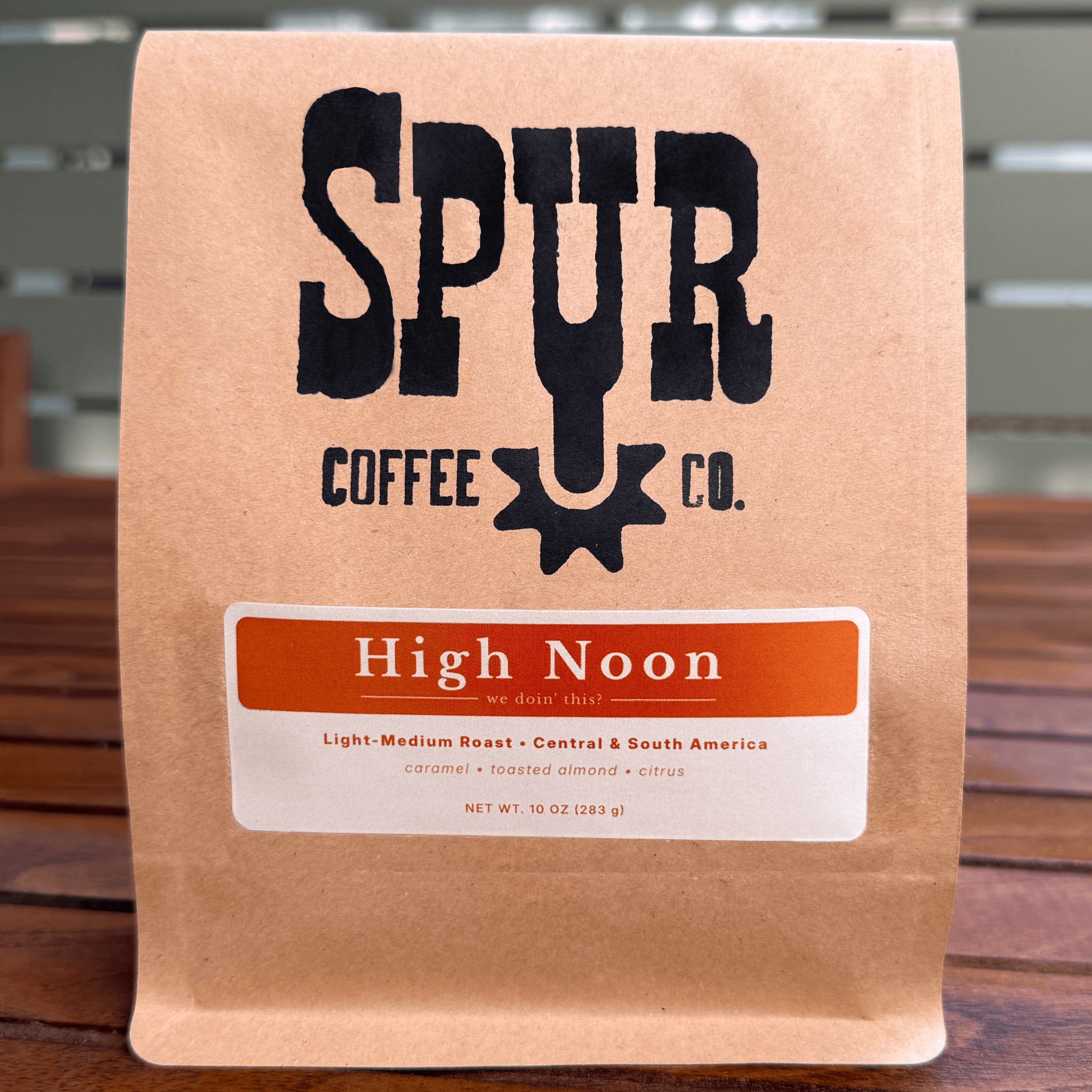
High Noon
A smooth, balanced daily drinker. Colombia + Guatemala, dialed in for clean extraction with enough body to hold up in milk.
Shop High Noon →